What Gets Passed On
Some things are taught directly. Others are picked up by being close enough to notice.
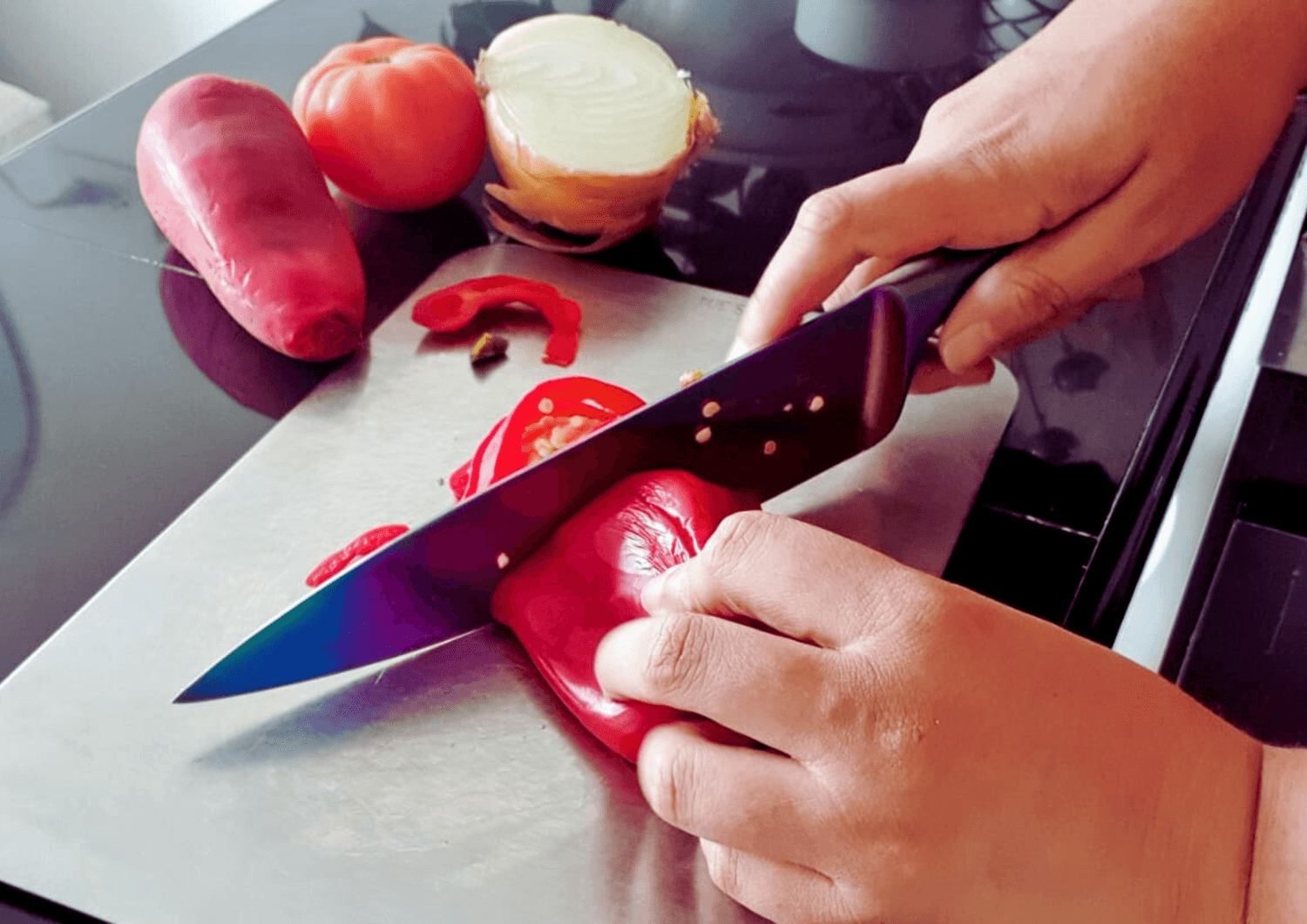
Some things you are taught.
Other things you pick up without realising.
No one sits you down. No one explains it step by step. You’re just there, often enough, for it to start making sense.
I didn’t grow up cooking.
But I grew up around it.
Food was always being made. Or already made. There was always something happening in the kitchen, even if I wasn’t part of it.
I wasn’t being taught directly.
But I was close enough to see what was going on.
You notice things like that.
Not consciously.
You just start to understand what belongs together. What things should look like. What “done” means, even if you couldn’t explain it yet.
It builds without much notice.
That kind of learning depends on proximity.
Being in the room. Seeing things repeated. Watching without being asked to watch.
It doesn’t feel like learning at the time.
But it stays.
When that proximity isn’t there, something shifts.
Food is still there, of course.
But the process isn’t.
Meals appear without much sense of how they came together.
Ingredients stay separate from outcomes. Cooking becomes something that exists elsewhere—on a screen, in instructions, in someone else’s hands.
There’s no baseline to draw from.
You see it later.
In small hesitations.
Not knowing where to start without a recipe.
Needing exact steps for things that don’t really have exact steps.
Avoiding cooking altogether because it feels like too much to figure out.
It gets described as preference.
“I don’t cook.”
“I’m not very good at it.”
But that’s not quite right.
You can’t rely on something you were never given in the first place.
Skills don’t just disappear.
They thin out.
Less repetition. Less exposure. Less need to pass things on in the way they once were.
What used to be assumed becomes optional. Then unfamiliar. Then, eventually, absent.
And it compounds.
If one generation cooks less, the next grows up with even less to observe.
There’s less to pick up. Less to absorb without trying.
What was once ordinary becomes something you have to go out of your way to learn.
Not everything needs to be preserved exactly as it was.
But some things aren’t replaced when they go.
They just leave a gap.
Cooking is one of those things.
Not as a craft. Not as a performance.
Just as a basic, everyday capability.
The ability to take what’s there and turn it into something you can eat.
That doesn’t come from information alone.
It comes from being around it.
Seeing it often enough for it to stop feeling unfamiliar.
I didn’t learn to cook as a child.
But I was close enough to it that when it was my turn, I knew where to begin.
That’s the part that gets passed on.
Not perfectly. Not formally.
But enough.
And sometimes, enough is the difference between knowing what to do— and not knowing where to start at all.
Food culture writer exploring the diaspora kitchen.
All rights reserved.
© 2026 Empire Kitchen