
Watching Someone Who Can’t Cook
You can see the difference immediately when someone has no reference point to draw from.
You notice it quickly.
Not in what someone says.
In how they move.
Standing in a kitchen, they don’t quite settle into it. There’s a pause before everything. A delay between picking something up and knowing what to do with it.
Nothing dramatic.
Just small hesitations that add up.
Leaving a pan on the stove a second too long before turning it on.
I’ve seen it enough times to recognise it straight away.
Someone opens a cupboard and looks inside for too long. Takes something out, then puts it back. Reads packaging like it might explain more than it does.
They’re not being careful.
They’re unsure.
It’s not about complicated food.
It shows up with the simplest things.
A pan on the stove. Oil in the cupboard. Something basic that needs to be heated, combined, turned into something else.
The gap appears there.
Between having the ingredients and knowing what happens next.
I think about a moment at university.
Shared kitchen. Same as everyone else’s. Nothing special.
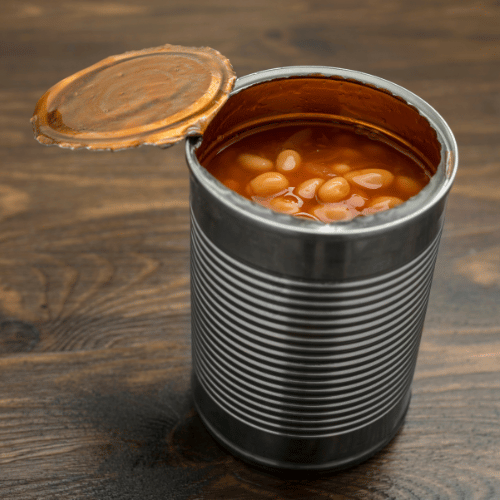
One of my housemates stood at the stove holding a tin, turning it in his hands, looking for instructions that weren’t there.
He wasn’t joking.
He genuinely didn’t know where to start.
I told him what to do.
Open it. Heat it. Stir it.
But even then, there was a pause.
As if the steps needed more than just saying.
As if something else was missing.
That’s the part that’s difficult to explain if you’ve never experienced it.
Cooking isn’t just a set of steps.
It’s a sense of how things move.
When to turn the heat down without being told. When something is done without checking the time. When something needs more, or less, or a bit longer.
You don’t get that from instructions alone.
You get it from being around it.
From seeing things repeated enough times that they start to make sense.
From watching without needing to be involved.
From small, unremarkable moments that build into something usable.
When that’s not there, the kitchen feels different.
Even if everything you need is in place.
Even if the food itself is simple.
There’s no entry point.
No obvious first move.
So everything takes longer.
More thought. More checking. More second-guessing.
Not because it’s difficult.
Because it’s unfamiliar.
It gets mistaken for lack of effort.
Or lack of interest.
But that’s not what it is.
You can see the difference in how people approach the same task.
One person walks in, turns something on, starts.
The other stands still for a moment longer than expected.
Working out where to begin.
That moment matters.
Because once you hesitate there, everything else feels harder than it needs to be.
I didn’t grow up cooking.
But I grew up close enough to it that I never had that pause.
I knew how to start, even when I didn’t know exactly what I was doing.
That’s the difference.
Not confidence.
Not skill.
Just familiarity.
And once you’ve seen what it looks like without it—
you don’t miss it when it’s there.
But you notice immediately when it’s not.
Food culture writer exploring the diaspora kitchen.
All rights reserved.
© 2026 Empire Kitchen