Why Teaching Your Team to Cook Is One of the Highest-ROI Decisions You'll Make This Year
Every business leader I speak to is trying to solve the same problem: how do I build a team that performs consistently, doesn't burn out, and stays? The answer, in part, is in the kitchen. And I can prove it.
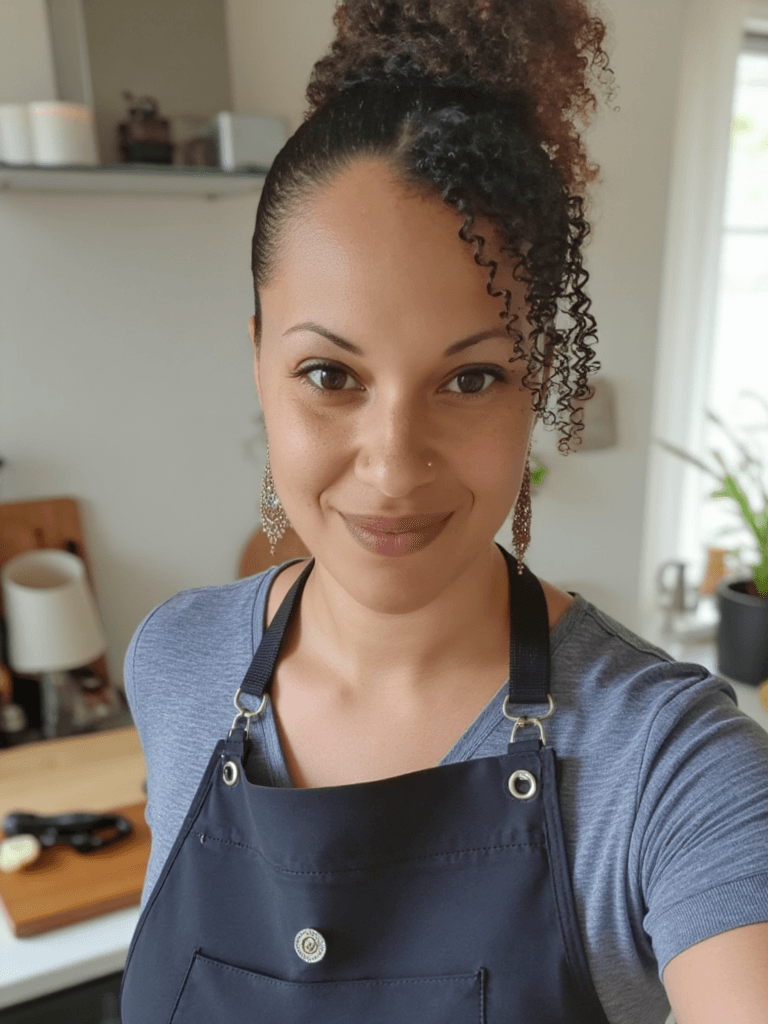
By Lace Flowers · Founder, Empire Kitchen
I am going to make a direct business case in this post. Not a wellness argument. Not a wellness argument. Not a values conversation. A calculation about the ROI of a team cooking workshop.
Because I speak to a lot of business owners who understand intuitively that what their team eats matters — who have seen the brain fog, the slow decisions, the energy crashes — but who need the numbers to make it a priority rather than a nice-to-have. This post is for them.
Start with the cost of the problem
Burnout costs UK employers £51 billion a year, according to Deloitte's 2024 research. Presenteeism - people showing up but not functioning - accounts for £24 billion of that alone. These are not statistics about people who are unwell. They are statistics about impaired decision-making and erratic performance sitting inside your business right now, often invisible, always expensive.
At the individual level, replacing a mid-level employee who burns out and leaves costs approximately 20% of their annual salary — at minimum. For a £35,000 employee that is £7,000. For a senior hire it climbs considerably higher. That figure does not include the strain on the remaining team while the role is empty, the cultural cost of watching it happen, or the institutional knowledge that walks out with them.
For every £1 invested in employee mental health, Deloitte finds employers see £4.70 back in productivity returns. The ROI on prevention is not complicated. It is just upstream of where most businesses are looking.
Why most wellbeing investment underperforms
The reason gym memberships, mental health apps, and wellbeing programmes so rarely move the needle is not that they are bad ideas.
It is that they are downstream interventions.
They address the effects of a depleted system - offering recovery and coping tools to people who are already running low, without ever building the system's capacity to handle what it is being asked to handle.
That capacity is physiological before it is psychological. The body's stress regulation system requires nutritional support to function. When the diet is consistently poor - in the ordinary way that busy professionals eating on the go consistently eat poorly - that system becomes dysregulated. Cortisol stays elevated. Cognitive performance erodes. The threshold for overwhelm drops.
This is the upstream work. And cooking, the practical skill of consistently preparing and sustaining your own nourishment, is how that upstream work gets done.

The specific gap in your team right now
Here is the part that makes this urgent rather than theoretical.
Research consistently shows that the majority of Gen Z adults - the generation now populating the workforce - cannot cook a basic meal from scratch. This is not laziness or indifference. It is the output of structural forces: dual-income households that cooked less, school curriculums that removed food education, and a delivery culture that made cooking feel genuinely optional for the first time in human history.
The result is a significant and growing proportion of your team running on ultra-processed convenience food - not from choice, but from the absence of skills and habits to do otherwise. And the downstream effects look like performance gaps: inconsistent focus, slower recovery, lower stress tolerance, emotional reactivity under pressure.
These are not attitude problems. They are nutrition problems. And they are fixable.
What the investment actually looks like
A 90-minute Empire Kitchen team cooking workshop for up to 10 people costs £750 and the ROI case is straightforward.
At 10 attendees, that is £75 per person. Less than a team lunch. A fraction of one week of lost productivity from a single burned-out employee. A rounding error compared to the cost of replacing someone who leaves.
What the team receives:
The evidence base - why nutrition directly affects decision-making, stress regulation, and cognitive performance, delivered as a clear business argument rather than a wellness talk.
A live cooking demonstration - a complete meal built from scratch on Zoom, making visible in real time that this is simpler than most people assume.
And a practical three-step framework they can use starting the same week.
What you receive as a leader:
A team that understands, for the first time, why nourishment is a performance variable rather than a personal lifestyle choice. That shift in perspective compounds. It changes what people prioritise on a busy day. It changes what the culture permits and normalises. It changes how people talk to each other about energy and capacity.
The comparison that matters
Most businesses compare wellbeing investment to other wellbeing investment.
Workshop vs. app. Workshop vs. EAP (empolyee assistance program).
Workshop vs. mental health day.
The right comparison is different.
Compare the workshop to the cost of the problem it prevents.
One burnout event: £7,000–15,000.
One workshop: £750–1,750 depending on team size.
If a single workshop prevents a single burnout - not eliminates the possibility, just meaningfully reduces the likelihood - it has paid for itself many times over before the Zoom call ends.
That is not a wellness calculation. That is a business one.
How to start
One workshop. Your team. 90 minutes online.
The pricing is on the workshop page, the booking takes three minutes, and there is no back-and-forth or invoice process.
If the ROI conversation needs to happen internally before you can book, the blog post 'Burnout Is a Systems Failure' gives you the evidence base to make it. Send that to whoever needs to see it.
The upstream work is available. The question is whether you start before the burnout, or after it.
Lace Flowers is the founder of Empire Kitchen, Co-Founder of The Flavor Room and co-author of Redefining Equity, Leadership and Influence in Online Business. She works with small business teams to build nourishment into their culture as a business strategy — not an afterthought.
All statistics cited in this post are sourced from published research as of 2024. Before publishing, confirm figures using the named sources: Deloitte Mental Health and Employers Report 2024, Champion Health Workplace Health Report 2024, Ketchum Food Research 2023, Employment Hero Wellbeing at Work Report 2024, and Mental Health First Aid England Burnout data. The Gen Z cooking figures (64–80%) are drawn from informal but widely cited polls in the New York Post and Daily Mail - used with appropriate framing ('research and surveys consistently suggest') rather than as hard data.
Food culture writer exploring the diaspora kitchen.
All rights reserved.
© 2026 Empire Kitchen